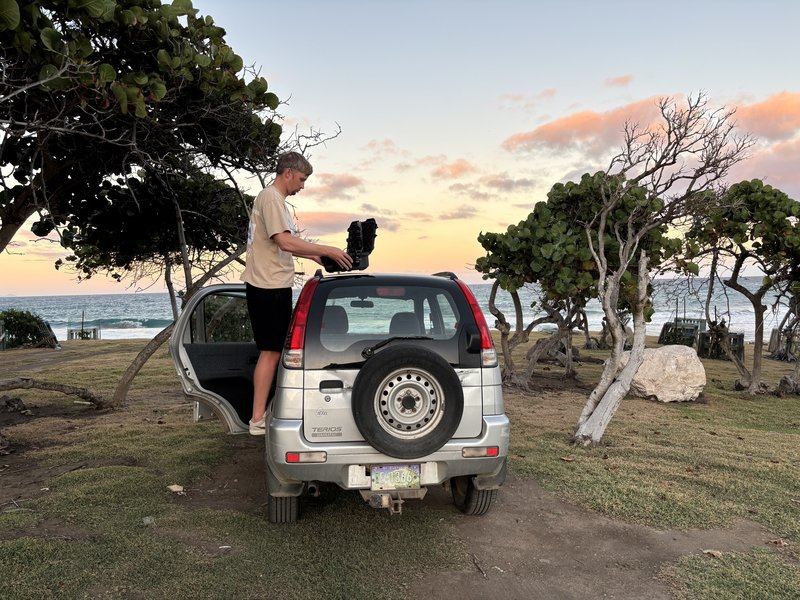
At the heart of NEPP lies reliable data collection. Continuous, long-term monitoring allows the Statia Government and its partners to better understand the island’s natural systems. This includes data collected by an internal data monitoring officer, STENAPA, research institutes, and colleagues on neighbouring islands. Through this collaboration, we can track coral reef health, sediment runoff, the locations and conditions of key species, and water and nutrient quality across the island. This information is critical for evidence-based decision-making, policy building, supporting sustainable agriculture, fisheries management, tourism, coastal protection, and overall community well-being.
Data collection also ensures compliance with international agreements such as the Specially Protected Areas and Wildlife of the Caribbean (SPAW)(1) the Convention on Biological Diversity (CBD)(2) the Birds Directive(3) the Habitat Directive(4) and the Convention of International Trade in Endangered Species of Wild Fauna and Flora (CITES)(5) which protect species and habitats throughout the Caribbean. Quarterly updates and annual reports summarize trends in biodiversity, fisheries, water quality, and invasive species, providing actionable insights for the Statia Government today and for long-term environmental planning.
Coordinated data collection and analysis give the Statia Government the information it needs to make informed and effective decisions. This helps the government respond to environmental challenges and plan effectively for a healthy future.
Follow the Statia Government official pages for updates on NEPP and ongoing environmental efforts.
References:
1) Specially Protected Areas and Wildlife of the Caribbean:SPAW Protocol Text | The Caribbean Environment Programme (CEP)
2) The Convention of Biological Diversity:The Convention on Biological Diversity
3) The Birds Directive:The Birds Directive - Environment - European Commission
4) The Habitats Directive:The Habitats Directive - Environment - European Commission
5) Convention of International Trade in Endangered Species of Wild Fauna and Flora (CITES):Trade in endangered species (CITES) | Rijksdienst Caribisch Nederland