It is vital to establish a baseline and track changes over time to evaluate the effectiveness of invasive species removal and the subsequent recovery of native flora. This process is essential for measuring increases in biodiversity and ensuring the long-term health of the island’s ecosystems.
Native species, including birds and bats, depend on these recovering plant populations for their survival. Moreover, enhanced species diversity strengthens the island’s resilience against growing challenges of climate change.
A central priority of restoring vegetation is tree rejuvenation. Although mature trees remain, the lack of young saplings (young trees) presents a critical challenge, as seedlings (sprouted seeds) are frequently consumed by invasive species. Without successful regeneration, the loss of older trees would leave the forest without future growth. The programme is therefore focused on quantifying how the removal of invasive species directly influences the regrowth and establishment of new trees.
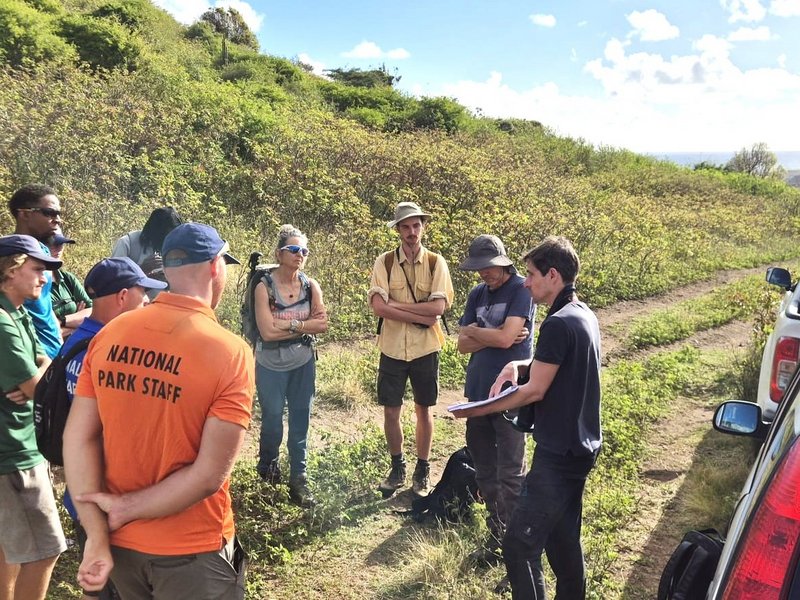
To support these efforts, external experts from Wageningen University and Research (WUR) provided specialised training in species identification and methodologies for assessing vegetation regrowth. The visiting expert team included a specialist with roots in Curaçao, bringing valuable regional experience and Caribbean-specific insight into the project.